

Adolescence is not merely a period of hormonal changes or increased conflict with parents. It is one of the most complex stages of psychological reorganization in human development. Teenagers must gradually distance themselves from the identity their family has defined for them and develop a more personal understanding of who they are. They want to discover who they are, what they believe, where they belong, and how independently they can make decisions without relying entirely on their parents.
This process is not always easy for parents. A child who once shared every problem may now close their bedroom door, say little about their friends, question family rules, and react strongly to parental advice. Parents may interpret these changes as disrespect, ingratitude, or evidence that the relationship is being lost. Meanwhile, the teenager may interpret parental concern as controlling behaviour or a lack of trust.
In these circumstances, the issue is not simply the teenager’s behaviour. The cycle developing between the parent and teenager is even more important. The parent becomes worried and increases control. To protect their independence, the teenager shares less information. Receiving less information increases the parent’s anxiety, leading to greater supervision and even more secrecy from the teenager.
1
Independence Without Disconnection: How Can We Let Teenagers Go Without Leaving Them Alone?
One of the developmental tasks of adolescence is moving from childhood dependence toward relative independence. Healthy independence does not mean no longer needing one’s family. Teenagers still need safety, support, and parental guidance. However, the form of that support must change.
During childhood, parents are usually the primary decision-makers. In adolescence, they must gradually move from direct management into a guiding role. This transition should not be based exclusively on chronological age. The teenager’s level of responsibility, the nature of the decision, and the degree of risk must also be considered.
Independence in choosing clothes is not the same as independence regarding substance use or dangerous driving. Parents can allow greater autonomy in low-risk areas while maintaining clearer boundaries in matters related to safety.
2
When Your Teenager Stops Talking: How Can You Reconnect?

A teenager’s silence does not always indicate a lack of trust. Sometimes, they have not yet developed the language to describe their experience. They may be afraid of being judged or receiving a lengthy lecture. They might assume that if they mention a problem, their parent will immediately take action and remove their autonomy.
Some teenagers conceal information because experience has taught them that every disclosure turns into an interrogation. They learn to say less to preserve their freedom.
Asking numerous questions does not necessarily create communication. Questions such as “Where were you?”, “Who were you with?”, and “Why didn’t you answer?” may be intended as expressions of care, but they can feel like an interrogation to the teenager.
Before beginning a conversation, parents should clarify what they intend to do:
- I just want to understand what happened.
- If you prefer, I can simply listen for now.
- Before offering any suggestions, I want to hear what you think.
- If the issue concerns your safety, I will need to intervene. In other matters, we can make the decision together.
These statements clarify the boundaries of the conversation and reduce uncertainty.
3
Listening Means More Than Remaining Silent

Sometimes, a parent listens with good intentions but is mentally preparing a response or looking for the teenager’s mistake. Teenagers can usually distinguish between genuinely being heard and merely being tolerated until they finish speaking.
Effective listening involves three stages.
Reflect the Experience
The parent demonstrates an understanding of the teenager’s account: “You felt humiliated in front of your friends.”
Clarify the Need
“Would you like us to find a solution, or do you simply need me to listen right now?”
Examine Reality and Responsibility
“Your friend’s behaviour was upsetting. At the same time, we also need to consider your part in what happened.”
Validating an emotion does not mean approving every behaviour. Parents can recognize that a teenager’s anger is understandable while still refusing to accept insulting language.
I understand that you are angry, and you have a right to be upset. You are not allowed to insult me or anyone else. We will continue when we can speak more calmly.
4
Separate Your Teenager’s Behaviour from Their Identity

One of the most damaging communication mistakes is turning a behaviour into an identity:
- You are irresponsible.
- You are a liar.
- You are selfish.
- You will never amount to anything.
These statements provide teenagers with no practical information. Instead, they deliver a sweeping judgment about their character. After hearing such a judgment, teenagers usually defend their identity rather than examine their behaviour.
Effective feedback should be specific and limited to a particular behaviour and time:
- You agreed to contact me by ten o’clock, but you did not.
- You have not submitted two assignments.
- You said you were at the library, but I later learned that you were somewhere else.
The consequence of the behaviour and the expectation for the future should then be explained clearly:
This language creates accountability while leaving a clear path for rebuilding trust.
5
Rules Are Effective Only When They Can Be Enforced

Many parents establish consequences while angry that they cannot realistically enforce later. Indefinitely taking away a teenager’s phone or completely preventing them from seeing their friends usually leads to power struggles.
An effective rule should have five characteristics:
- ✓It should be clear.
- ✓It should involve observable behaviour.
- ✓It should be proportionate to the risk.
- ✓It should have a specific review date.
- ✓Its enforcement should not depend on the teenager’s cooperation.
For example, “You need to be more responsible” is not a measurable rule. “If you are out at night, you will send a brief message by ten o’clock” is much clearer.
Whenever possible, the consequence should be logically related to the behaviour. If a teenager returns home late without prior agreement, temporarily requiring them to return home earlier is more logical than cancelling their sports program.
Consequences should never become a tool for releasing parental anger. Their purpose is to support learning and rebuild trust.
6
From Power Struggles to the Gradual Transfer of Responsibility
Some teenagers understand the rules and accept the consequences but continue repeating the same behaviour. In these situations, repeating the rule or increasing the severity of punishment is not always helpful.
It is important to determine what the teenager gains from the behaviour. Is it a way of achieving independence? Are they avoiding a difficult assignment? Does the behaviour improve their status among friends? Are attention or executive-functioning difficulties genuinely preventing them from following the plan? Has conflict with the parent become a way of maintaining a sense of power?
Behaviour that appears to be “defiance” from the outside may serve different functions. An intervention that does not identify those functions is likely to remain superficial.
Transferring responsibility to teenagers cannot happen only through words. If a parent says, “Your schoolwork is your responsibility,” but checks the assignments every night and repeatedly contacts the teacher, the responsibility has not truly been transferred.
For a genuine transfer of responsibility, the following must be established:
- ✓Which decisions belong to the teenager
- ✓What the natural consequences of each choice will be
- ✓At what point the parent will intervene
- ✓What degree of decline or failure is tolerable
- ✓What risks cannot be tolerated
The goal is not to leave teenagers unsupported. It is to prevent parents from performing all of their teenagers’ executive functions for them.
7
When a Teenager Repeatedly Breaks a Rule
Repeated rule violations can have several meanings. The teenager may consider the rule unfair. The behaviour’s immediate reward may be more powerful than its delayed consequence. Consequences may not be applied consistently. The teenager may also lack the skills required to perform the alternative behaviour.
Before changing the consequence, consider four questions:
- Does the teenager know precisely what behaviour is expected?
- Do they genuinely have the ability to perform it?
- Is the consequence applied consistently and without prolonged arguments?
- Does appropriate behaviour provide any benefit, or does it merely allow them to avoid punishment?
If the problem is a lack of skills, additional punishment will not help. A teenager with poor time-management skills will not become organized simply by being told to “be organized.” They need to learn when to begin, how to divide the task into stages, which environmental cues to use, and how to monitor their progress.
If the issue has become a power struggle, less discussion combined with calm enforcement of the consequence may be more effective. Parents do not need to persuade the teenager each time that the rule is fair.
I know you disagree with this rule. We can review it on Sunday. Until then, our current agreement remains in effect.
8
Parents Should Not Make Teenagers Responsible for Regulating Their Emotions
Sometimes, a parent can only feel calm when the teenager obeys or provides complete information. In these circumstances, the teenager’s behaviour becomes a tool for regulating the parent’s anxiety.
Parental anxiety is understandable. However, the teenager should not be responsible for relieving it. Parents need to reduce their own level of emotional activation before beginning a conversation.
Returning to the conversation is essential. If a parent stops a discussion and never returns, the teenager learns that taking a break means avoidance or silent punishment.
9
Between Control and Letting Go: Repairing the Relationship After Conflict

A healthy family is not a family without conflict. It is a family capable of repairing the relationship after conflict.
Repair begins when each person accepts their contribution without adding the word “but”:
- I should not have spoken to you in that tone.
- My concern was genuine, but shouting was not appropriate.
- You had a right to be upset about my decision.
An apology does not reduce parental authority. It teaches teenagers that power and accountability can exist together.
10
Teenagers’ Privacy and Safety Boundaries
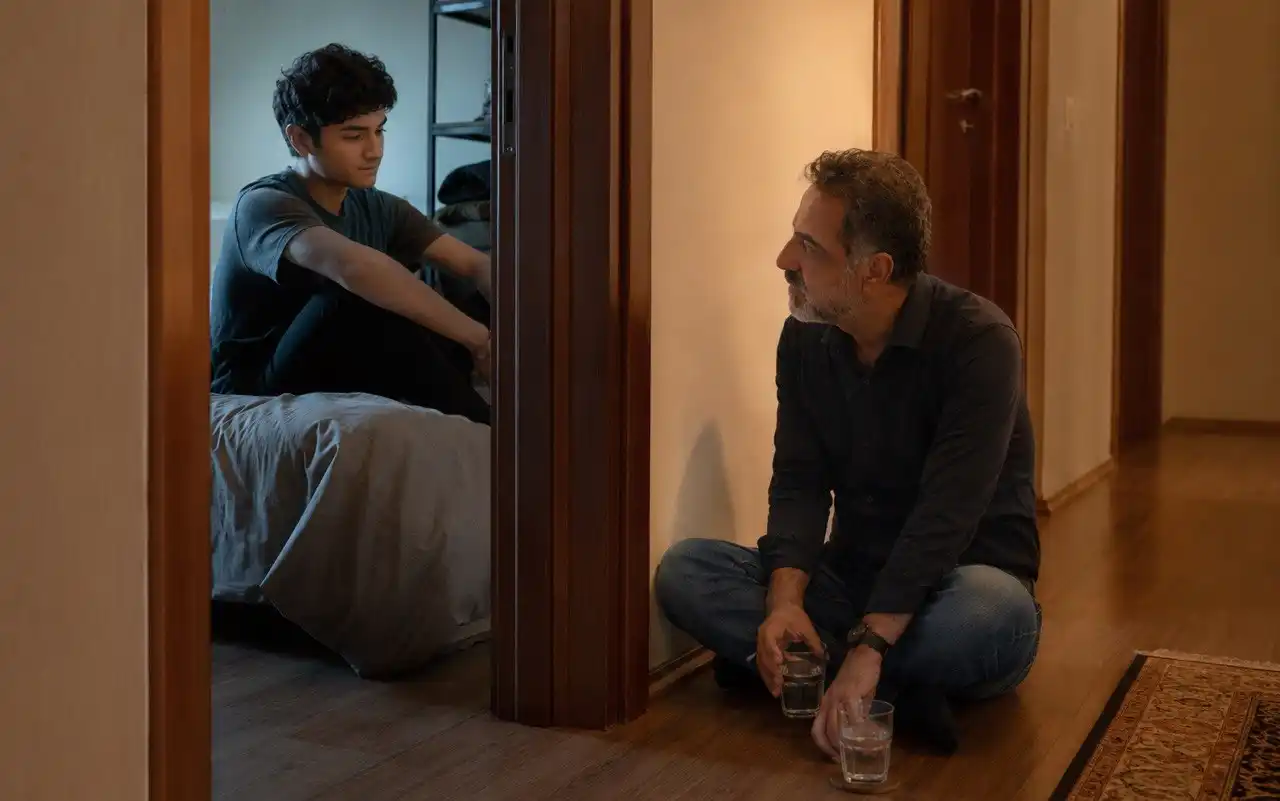
Teenagers need privacy to develop their identities. However, privacy is not the same as dangerous secrecy.
A useful principle is to adjust the level of supervision according to the level of risk. Teenagers who behave responsibly should experience greater freedom. If credible warning signs exist, parents may increase supervision to protect their safety.
Secretly checking a teenager’s phone without a clear reason may damage trust. If there is a serious concern, parents should be as transparent as possible:
I have noticed changes that have made me concerned about your safety. I would prefer to look into this with your knowledge. My goal is not to punish you. I need to make sure you are not in danger.
11
Working with Parents and Working Directly with Teenagers
Not every adolescent problem can be resolved through parent education. Some teenagers need an independent therapeutic space where they can discuss anxiety, mood, friendships, body image, academic pressure, identity, and high-risk behaviours.
A therapist may work with the teenager in the following areas:
- ✓Recognizing and naming emotions
- ✓Regulating anger and impulses
- ✓Problem-solving skills
- ✓Tolerating frustration
- ✓Assertive communication
- ✓Coping with peer pressure
- ✓Cognitive flexibility
- ✓Planning and executive functioning
- ✓Assessing thoughts of self-harm
- ✓Developing an independent and realistic identity
Working with parents is also important. Sometimes, a teenager attends therapy alone but returns to the same family cycle after each session. If the parent does not change their communication style or approach to boundaries, the benefits of treatment may be limited.
At the same time, the entire responsibility for change should not be placed on the teenager. The statement, “They are the one with the problem, so they are the one who needs treatment,” overlooks the role of the family system.
12
When Is Adolescent Behaviour Part of Normal Development?
A growing need for privacy, increased importance of friendships, sensitivity to judgment, and arguments about rules can all be part of normal development. Some fluctuation in mood is also expected.
Determining whether a problem exists requires more than noticing the presence of a particular behaviour. Its intensity, duration, difference from the teenager’s previous pattern, and impact on functioning are all important.
13
When Should Parents Be Concerned?
The following warning signs require professional attention:
- ✓A persistent and noticeable change in mood
- ✓Severe and ongoing irritability or anger
- ✓Increasing social isolation
- ✓A significant decline in academic performance
- ✓Major changes in sleep or appetite
- ✓Anxiety or panic attacks
- ✓Substance use
- ✓High-risk sexual behaviour
- ✓Running away from home
- ✓Self-harm
- ✓Talking about death or worthlessness
- ✓Giving away personal belongings while expressing hopelessness
- ✓Experiences of bullying or violence
- ✓A sudden and unexplained change in personality or functioning
- ✓Psychotic symptoms, such as hearing voices or holding highly unusual beliefs
If a teenager talks about suicide or self-harm, the parent should ask directly:
- Have you been thinking about dying?
- Have you been thinking about hurting yourself?
- Have you made a plan or identified a way to do it?
14
Parenting Across Different Generational Values

In many Persian-speaking families, the parent–child relationship is not simply a relationship between two individuals. Family reputation, respect for elders, connection with relatives, academic achievement, and responsibility toward the family may all hold considerable importance.
These values are not inherently unhealthy. A problem arises when teenagers must deny their genuine experiences to maintain a sense of belonging.
Parents may interpret a desire for independence as disrespect. Teenagers may interpret every family responsibility as an attempt to control them. Culturally responsive therapy helps the family examine the meaning of these behaviours within its particular cultural context.
15
Firm Boundaries Without Breaking the Relationship: A Practical Structure for Difficult Conversations
The following structure can be used to discuss a specific problem.
Observation
Describe the behaviour without attaching a label: “You came home after the agreed-upon time three times this week.”
Concern
Clearly explain the reason for your concern: “When you do not contact me, I worry about your safety, and the trust between us is damaged.”
Listening
Ask for the teenager’s perspective: “I want to understand what happened from your point of view.”
Negotiation
Separate the negotiable and non-negotiable elements: “We can discuss the exact time. Letting me know that you will be late is not optional.”
Consequence
Establish a brief and clear consequence: “For the next two weeks, you will need to come home earlier. We will then reconsider the decision based on how things go.”
Repair
Explain the path toward restoring freedom and trust: “If you follow our agreement, the restriction will be removed. The goal is not to punish you forever.”
16
Frequently Asked Questions
How Parenting and Adolescent Counselling Can Help
Counselling is not intended to make teenagers more obedient or leave parents without authority. Its purpose is to build a system in which responsibility, independence, communication, and safety can coexist.
Parents learn to manage their anxiety without becoming excessively controlling, separate rules from anger, establish enforceable consequences, and repair the relationship after conflict.
Teenagers have an opportunity to understand their emotions more clearly, accept responsibility for their choices, communicate their needs and boundaries without secrecy or aggression, and develop their personal identities within a safe relationship.
If conflicts have become repetitive or conversations repeatedly end in shouting, silence, or threats, professional counselling can help identify the family’s interaction cycle and develop appropriate interventions. Lasting change begins when family members stop searching for someone to blame and start changing the structure of their interactions.
