

Many couples consider couples therapy only after their relationship has reached a crisis point. Conversations quickly turn into arguments. The silence between them lasts longer. Emotional or sexual intimacy has declined. Trust has been damaged, or one partner feels that they are no longer seen by the other.
However, a relationship crisis does not always involve shouting or visible conflict. Some relationships deteriorate in silence. A couple may manage life’s responsibilities effectively and appear stable from the outside, while internally their relationship has become a partnership between two roommates. They are no longer curious about each other’s emotional worlds. Conversations are limited to finances, work, children, or daily plans, and both partners gradually stop expressing their deeper needs.
Online couples therapy in Farsi provides a professional and structured environment in which partners can identify what lies beneath layers of anger, silence, criticism, or distance. The purpose is not to determine who is at fault. It is to recognize the cycle that has trapped both partners and is damaging their relationship.
A couples therapist does not focus only on the subject of the disagreement. The therapist examines the relationship process: how one partner responds when feeling insecure, what reaction this creates in the other person, and how the resulting sequence reinforces both partners’ original fears.
The apparent subject of an argument may be coming home late. At a deeper level, however, one partner may be asking, “Do I still matter to you?” The other person’s defensive response may arise from a different fear: “No matter how hard I try, will I always be inadequate in your eyes?”
Couples therapy helps partners move beyond everyday disputes and understand the emotional logic hidden beneath their conflict.
1
What Is Couples Therapy?

From “You Always…” to “I Am Afraid…”: The Deeper Path of Couples Therapy
Couples therapy is a specialized form of psychotherapy in which the relationship between two people is the primary focus of intervention. The therapist works with both partners to identify harmful interaction patterns, make deeper emotional experiences expressible, evaluate trust and security within the relationship, and create opportunities for new responses.
Couples therapy is not merely communication-skills training. If the problem were simply a lack of technique, many couples could change their relationship by reading a book or listening to a podcast. Most couples experiencing chronic conflict know, during calm moments, that they should listen. They understand that insults are harmful and that expressing feelings is more constructive than blaming. The central problem is that this knowledge becomes inaccessible when an emotional threat is activated.
When a person’s attachment system is triggered, the brain does not process a partner’s behaviour as a neutral event. Silence may mean rejection. Disagreement may feel like disrespect. A request for space may appear to signal abandonment. A small mistake may reactivate an old memory of betrayal or mistrust.
In such moments, the person does not engage from an entirely rational position. They react from a part of themselves attempting to prevent further harm. One person responds by protesting and pursuing more intensely, while the other withdraws or shuts down. One asks more questions to obtain a response, while the other responds less to escape the pressure. The more the first person approaches, the more the second pulls away. Both then interpret the other’s behaviour as evidence that their fear was justified.
Couples therapy shifts the problem from “Your personality is the issue” to “This is a pattern that becomes activated between us.” This may sound like a simple change, but it is clinically significant. As long as each person views their partner as the primary enemy, the relationship’s energy will be spent attacking, defending, or withdrawing. When the cycle becomes the shared enemy, cooperation can begin again.
2
How Is Couples Therapy Different from Relationship Counselling?
In couples therapy, both partners attend joint sessions, and the main focus is the living relationship between them. During the session, the therapist observes their communication, emotional reactions, patterns of closeness and distance, defences, and power dynamics. The relationship is therefore not only described; it becomes visible within the therapeutic setting.
Relationship counselling may also be conducted individually. For example, someone may want to examine their patterns in choosing partners, fear of intimacy, emotional dependence, or difficulty establishing boundaries. In this case, the primary goal is individual work on that person’s relational experiences and patterns.
In couples therapy, the therapist is not an advocate for one partner. The therapist should not form an alliance with one person or identify the other as responsible for every problem. However, therapeutic neutrality does not mean ethical indifference. When humiliation, threats, violence, coercive control, or serious violations of safety are present, the therapist must assess them clearly and responsibly. Remaining neutral toward individuals is not the same as remaining neutral toward harmful behaviour.
3
Why Do Couples Repeat the Same Arguments?
Couples often believe that they are fighting about money, family, work, mobile phones, parenting, or sex. These issues genuinely matter, but the intensity of the conflict does not always arise from the topic itself. Conflict becomes chronic because of the meaning each partner assigns to the other’s behaviour.
If one partner makes a purchase without discussing it first, the issue may not be limited to the amount spent. The other person may interpret the decision as evidence that their opinion does not matter. The person who made the purchase may experience their partner’s objection as an attempt to control their independence. The argument is no longer about a purchase. One person is fighting to be seen, while the other is fighting to preserve their freedom.
Within intimate relationships, every behaviour is interpreted through the couple’s shared history. A statement that feels insignificant in one relationship may activate an old wound in another. If trust has previously been damaged, a brief delay may quickly trigger suspicion and anxiety. If someone has repeatedly felt unheard, a short response may signify that they are being disregarded again.
Chronic conflict usually follows a predictable sequence:
- 1An emotional trigger is activated.
- 2The person assigns a threatening meaning to it.
- 3A primary emotion such as fear, shame, loneliness, or helplessness appears.
- 4A secondary emotion such as anger, coldness, or contempt replaces it.
- 5A protective behaviour develops.
- 6The first person’s protective behaviour activates the second person’s sense of threat.
- 7The second person’s response confirms the first person’s original fear.
For example, someone fears their partner’s emotional distance. Instead of expressing that fear, they criticize: “You never care about this relationship.” Their partner, who fears inadequacy and failure, becomes defensive and silent. The first person interprets the silence as proof that they do not matter. Their criticism intensifies, and the other person withdraws further.
On the surface, one partner may appear “too sensitive” and the other “too cold.” At a deeper level, both are trying to protect the relationship. One protests in an attempt to restore connection. The other uses silence to prevent conflict from escalating and to avoid experiencing failure. Both strategies are understandable, but their interaction makes the relationship increasingly unsafe.
4
Signs That You May Need Couples Therapy
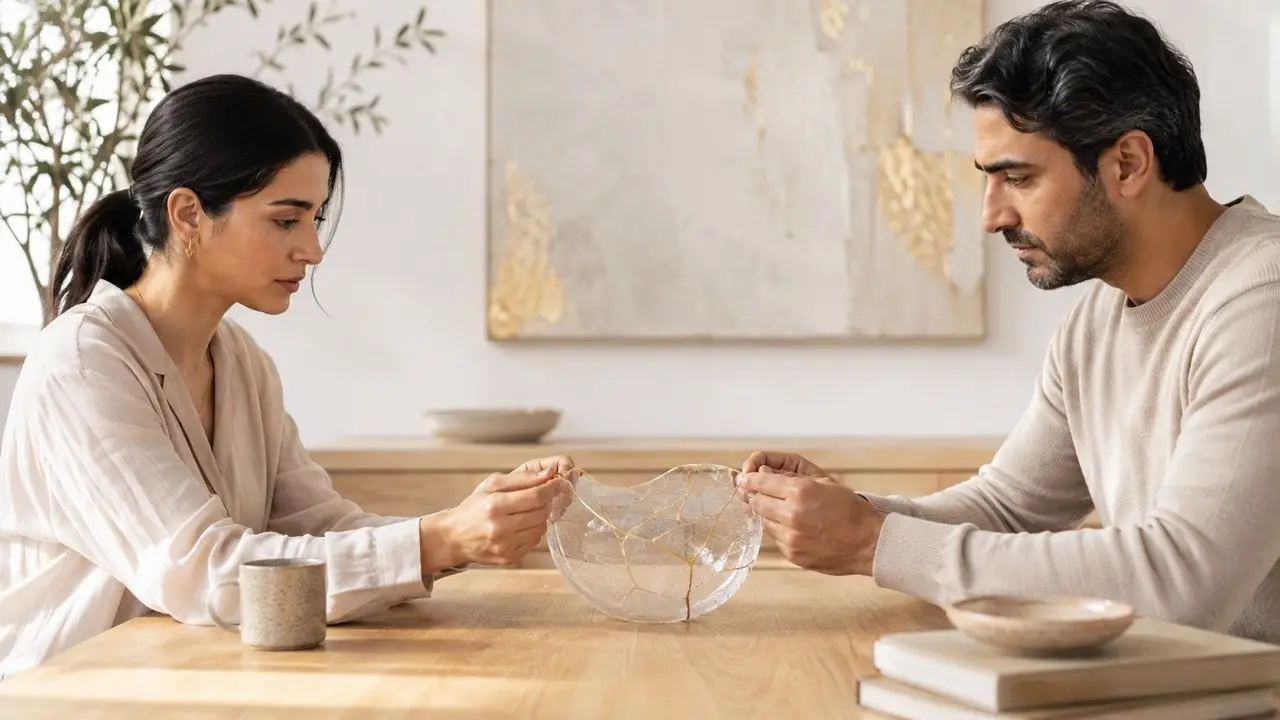
Couples therapy is not only for relationships approaching separation. Seeking support early can prevent patterns from becoming established and more difficult to change.
Important signs that couples therapy may be helpful include:
- ✓Conflicts that recur around different subjects but follow the same structure
- ✓Chronic criticism and a focus on each other’s character flaws
- ✓Intense defensiveness and an inability to acknowledge personal responsibility
- ✓Contempt, mockery, or belittling a partner
- ✓Prolonged silence and emotional withdrawal
- ✓Feeling lonely in each other’s presence
- ✓Reduced or absent emotional and sexual intimacy
- ✓Damaged trust following infidelity, secrecy, or dishonesty
- ✓Conflict involving families of origin and the limits of their involvement
- ✓Disagreements about money, parenting, roles, or the relationship’s future
- ✓Unequal emotional and practical responsibilities
- ✓Serious uncertainty about remaining in or ending the relationship
- ✓An inability to repair the relationship after an argument
- ✓Every sensitive conversation becoming a battle over who is to blame
- ✓Using threats of separation to control the other person or obtain a response
One of the most significant warning signs is when partners can no longer listen to each other’s internal experiences with curiosity. Before a statement is understood, it is interpreted as an attack, defence, or manipulation. Under these circumstances, even an attempt to explain further may intensify conflict because the channel through which the message is received has already been affected by mistrust.
5
Emotionally Focused Therapy (EFT) for Couples
Emotionally Focused Therapy is grounded in attachment theory. From this perspective, a romantic relationship is more than a source of companionship for adults. It becomes one of their most important sources of psychological security. In an intimate relationship, people need to know that their partner is emotionally accessible, responsive, and concerned about their experience.
The unspoken question beneath many couples’ conflicts is: “When I need you, will you be there for me?”
When the answer feels uncertain or negative, protest reactions become activated. Some people intensify their pursuit of connection. They raise their voice, criticize, or demand an immediate response. Others withdraw, become silent, turn toward work or another activity, or shut down emotionally.
EFT does not simply attempt to stop the visible behaviour. The therapist helps identify the primary emotion beneath the defensive response. Beneath anger may be a fear of not mattering. Beneath silence may be shame and fear of inadequacy. Beneath controlling behaviour may be terror of losing the relationship.
When each person can express their vulnerable experience without attacking or blaming, the relationship’s emotional message changes. “You are never there for me” may move closer to the deeper experience: “When you do not respond, I feel that I do not matter to you, and I become afraid of losing our relationship.”
This is more than an improvement in wording. The person needs to access an emotion from which they usually distance themselves through defensive behaviour. Their partner must also develop the capacity to hear that emotion without becoming overwhelmed by shame or defensiveness. The therapist slows and regulates this process so that the couple can develop a new experience of emotional accessibility and responsiveness.
6
The Gottman Method and Understanding the Architecture of Conflict
The Gottman Method is based on decades of research into couples’ interactions and pays particular attention to patterns that threaten relationship stability. Criticism, contempt, defensiveness, and stonewalling are among the most destructive patterns identified within this model.
Criticism differs from a healthy complaint. A complaint focuses on a specific behaviour, while criticism targets the person’s character. “I felt upset when you changed the plan without discussing it with me” is different from “You are always selfish.” In the second statement, one behaviour becomes a judgment about the person’s entire identity.
Contempt is more destructive than criticism because it creates a position of moral superiority. Mockery, eye-rolling, an insulting tone, and belittling communicate that the other person is unworthy of respect. When contempt becomes normalized, emotional safety declines significantly.
Defensiveness is usually an attempt to protect oneself from shame or blame. However, intense defensiveness prevents either person from recognizing their contribution. Both partners attempt to prove their innocence, leaving the problem without anyone taking responsibility for it.
Stonewalling occurs when a person disengages from the interaction. It does not always indicate indifference. Sometimes, the nervous system has reached a level of arousal at which effective processing is no longer possible. Heart rate increases, the capacity to listen decreases, and the brain enters a defensive state.
Continuing an argument under these circumstances is unlikely to resolve the problem. However, taking a break also requires structure. Leaving without stating when one will return may feel like abandonment to an anxious partner. Physiological regulation is more helpful when the person clearly explains how long the break will last and when they will return to continue the conversation.
The Gottman Method does not focus only on managing conflict. Emotional friendship, knowledge of each other’s inner worlds, responding to small attempts at connection, and the ability to repair after harm are also essential. A stable relationship is not a relationship without conflict. It is one in which conflict does not destroy respect and security.
7
When Trust Has Been Damaged
Emotional or sexual infidelity, dishonesty, financial secrecy, and violations of relationship agreements can destabilize the structure of trust. Following such an experience, partners often face two very different psychological realities.
The injured partner may become highly vigilant, ask repeated questions, review details, and become sensitive to small signals. These reactions do not always arise from a desire to control. The brain is attempting to understand an event it did not predict and prevent it from happening again.
The partner who violated trust may feel ashamed and want the subject to be resolved as quickly as possible. They may experience repeated questions as punishment. However, rushing to move beyond the crisis can communicate to the injured person that the depth of their wound has still not been understood.
Trust is not rebuilt through demands for immediate forgiveness or broad promises that the behaviour will never happen again. The process requires clear accountability, tolerance of difficult emotions, appropriate transparency, and predictable behaviour over time. At the same time, therapy should not become an endless interrogation or a system of permanent surveillance. The goal is to establish a structure that preserves truth, responsibility, and the possibility of repair.
Forgiveness is not the client’s moral obligation. A therapist should not pressure an injured person to forgive. Genuine repair becomes possible when the harm is named, responsibility is accepted without justification, and change extends beyond words.
8
The Role of Culture in Couples’ Conflicts
Relationships do not develop in a vacuum. People’s understanding of love, commitment, gender roles, independence, loyalty, respect, family, and privacy is influenced by their cultural and family experiences.
In some relationships, maintaining close ties with families of origin is an important value. Within the same relationship, one partner may view family involvement as a threat to the couple’s independence. The disagreement is not merely about the number of calls or visits. For one person, reducing contact may signify disloyalty to family. For the other, the same contact may indicate that the couple’s relationship has still not become the priority.
Money may also carry different cultural and family meanings. For one person, money may represent security; for another, freedom; and for someone else, a means of caring for family. When these meanings are not recognized, couples reduce their disagreement to stinginess, irresponsibility, or controlling behaviour.
A Farsi-speaking couples therapist can recognize linguistic and cultural nuances without assuming that every couple shares the same values. The purpose is not to impose individualism or collectivism. It is to help partners understand what loyalty, respect, independence, and intimacy mean to each of them and to develop their relationship agreement more intentionally.
9
How Are Couples Therapy Sessions Structured?
Initial sessions focus on a thorough assessment of the relationship. The therapist asks about the relationship’s history, significant turning points, primary conflicts, painful experiences, strengths, and each person’s goals for therapy.
Sometimes, part of the assessment involves a brief individual session with each partner. The purpose is not to create a secret relationship with the therapist. Policies regarding individual information and secrets should be clear from the beginning. Couples therapy cannot be built on a hidden alliance between the therapist and one partner.
Following the assessment, the therapist shares an initial formulation with the couple. This formulation explains how the negative cycle begins, which emotions and meanings each person experiences, which defences become activated, and how those defences make the relationship increasingly unsafe.
During later stages, the therapist does not simply allow the couple to repeat their usual argument in the office or online session. The therapist interrupts and slows the interaction, redirects attention from the apparent topic to each person’s immediate experience, and helps the partners distinguish secondary anger from primary fear or sadness. The therapist then creates conditions in which a new emotional message can be directly expressed and received between them.
Successful treatment does not mean that the couple remains calm only in the therapist’s presence. The goal is for partners to recognize the cycle earlier outside the session, move away from automatic attacking or withdrawal, express their deeper experiences, and return to repair the relationship after a disconnection.
10
What Are the Advantages of Online Couples Therapy?

Online couples therapy allows both partners to participate from a private setting. This format can be particularly suitable for couples without local access to a Farsi-speaking couples therapist or those with demanding work schedules.
Online therapy is not merely a video conversation. The therapist needs to consider how the couple is positioned, the quality of the audio, privacy, and whether both partners’ reactions can be observed. Ideally, the couple should use one device with an appropriately sized screen and sit where both faces and body language are visible.
If the partners join from separate locations, the therapist should assess the reason for the arrangement and its impact on the process. Sometimes, participating separately allows each person to speak more openly. In other circumstances, physical distance may reinforce avoidance or relationship instability.
Online therapy makes treatment more accessible for many couples. However, when active violence, threats, or severe control are present, joint online sessions may not be safe or appropriate. Assessment before treatment begins is essential in these situations.
11
When Are Joint Sessions Inappropriate?
Joint couples therapy is not suitable in every situation. If one partner fears the consequences of speaking honestly or is being controlled or threatened, it cannot be assumed that both people are participating with equal freedom.
Physical violence, serious threats, sexual coercion, severe financial control, stalking, or excessive surveillance must be assessed before joint sessions continue. Under these circumstances, safety and access to appropriate specialized services should be the initial priorities.
If one partner is actively and secretly continuing another relationship but is unwilling to make a clear decision about it, couples therapy may reach an impasse. A therapist cannot ask one partner to work toward rebuilding trust while the structure of secrecy remains active.
Uncontrolled substance use or severe psychological instability may also require individual or specialized intervention before couples therapy begins. This does not mean that relationship treatment is impossible. It means that the sequence of interventions must be chosen carefully.
12
Is the Goal of Couples Therapy Always to Preserve the Relationship?
No. A therapist should not assume in advance that remaining together is the desired outcome. In some relationships, therapy leads to repair and renewed closeness. In others, the couple concludes that continuing the relationship is inconsistent with their needs and values.
Sometimes, the couple’s initial goal is to clarify this uncertainty. One partner wants to remain, while the other is unsure. Beginning intimacy-focused interventions immediately may be premature. First, it is necessary to determine whether both partners are willing to explore the possibility of rebuilding the relationship.
If separation becomes the final decision, therapy can help the couple proceed with less harm. Ending a relationship does not necessarily mean that therapy has failed. Sometimes, a healthier outcome is a clearer and more responsible decision that ends prolonged uncertainty.
13
Frequently Asked Questions About Couples Therapy
Love Endures When a Relationship Has the Capacity to Repair

A healthy relationship is not one without disagreements. Two people with different histories, needs, sensitivities, and inner worlds will inevitably disappoint or hurt one another at times. The future of a relationship is not determined only by whether conflict exists. The couple’s ability to recognize their destructive cycle, respond to harm, and return to connection matters more.
Couples therapy helps partners move away from fighting about who is the problem and toward understanding what happens between them. Anger is no longer treated as the relationship’s only reality. Fear, shame, grief, and the need for connection are also given an opportunity to be expressed. Silence is not automatically interpreted as indifference, and protest is not simply labelled as excessive neediness.
When both partners can recognize the protective logic behind their own and each other’s behaviour, the relationship can shift from a battleground of proof and defence into a space for understanding and responsibility. This change does not mean ignoring harm or abandoning boundaries. A relationship becomes safer when the truth is expressed more clearly and responsibility for behaviour is taken more seriously.
If your relationship is caught in a cycle of conflict, distance, or mistrust, you can book an online couples therapy session in Farsi. The first session provides an opportunity to professionally assess the structure of your relationship, both partners’ needs, and whether couples therapy is appropriate for your circumstances.
