

A motor vehicle accident does not affect only the body. Sometimes, the vehicle is repaired and the physical pain begins to improve, yet the mind remains at the scene of the accident. Fear of driving, anxiety attacks, nightmares, insomnia, irritability, feelings of being unsafe, difficulty concentrating, or avoiding streets and highways may continue for weeks or months. Some people also experience depression, anger, helplessness, or an identity crisis because of chronic pain, temporary disability, time away from work, or changes in their family roles.
In British Columbia, counselling and psychological services may be included as part of ICBC’s care and recovery benefits. However, having a claim number does not mean that every type of counselling, for any length of time and with any counsellor, will automatically be covered. To use this coverage appropriately, it is important to understand the differences between eligibility for benefits, pre-approved coverage for initial sessions, and approval for continued treatment.
1
Who Can Access ICBC Counselling?
Under Enhanced Care, British Columbia residents who are injured in a motor vehicle-related accident may generally be eligible for care and recovery benefits, regardless of whether they were considered responsible for the accident.
Coverage is not limited to the driver and may include:
- ✓Drivers who were at fault or not at fault
- ✓Passengers
- ✓Motorcyclists
- ✓Cyclists involved in an accident with a motor vehicle
- ✓Pedestrians injured in a motor vehicle-related accident
- ✓In many cases, British Columbia residents involved in an accident elsewhere in Canada or in the United States
- ✓People injured in a hit-and-run accident, even if the other driver has not been identified
However, experiencing psychological distress after an accident is not necessarily sufficient on its own. The central questions are whether there is a reasonable clinical connection between the accident and the person’s current symptoms and whether counselling can help them return to their pre-accident level of functioning.
2
What Psychological Concerns May Be Covered?
You do not necessarily need a formal diagnosis of post-traumatic stress disorder, or PTSD, to receive ICBC counselling. Your symptoms do not need to meet the full criteria for a psychiatric disorder. What matters is the identifiable effect of the accident on your mental health and everyday functioning.
Relevant concerns may include:
- ✓Fear of driving, travelling in a vehicle, or passing the accident location
- ✓Anxiety on highways, at intersections, in traffic, or when hearing the sound of brakes
- ✓Intrusive memories, nightmares, or re-experiencing the accident
- ✓Panic attacks and physical symptoms of anxiety
- ✓Persistent hypervigilance and feelings of danger
- ✓Insomnia or disrupted sleep patterns
- ✓Reduced concentration, memory, or decision-making ability
- ✓Irritability, anger, or reduced tolerance
- ✓Feelings of guilt, particularly when another person was injured
- ✓Depression and loss of motivation
- ✓Grief following another person’s death or serious injury
- ✓Anxiety related to pain, physical limitations, or uncertainty about recovery
- ✓Difficulty returning to work, education, childcare responsibilities, or social activities
- ✓Strain on a couple’s relationship or family because of accident-related injuries
During a professional assessment, simply listing symptoms is not enough. The counsellor examines how those symptoms have affected the person’s actual functioning. For example:
- Can the person still drive to work?
- Are they avoiding travelling in vehicles?
- Has disrupted sleep led to lateness, mistakes, or absences from work?
- Has fear reduced their independence?
3
What If You Had a Mental Health Concern Before the Accident?

A history of anxiety, depression, trauma, medication use, or counselling before the accident does not automatically disqualify someone from coverage. The more important question is whether the accident worsened a pre-existing condition, caused new symptoms, or reduced the person’s functioning compared with their previous level.
For example, someone may have experienced mild, well-managed anxiety before the accident but become unable to drive or begin experiencing panic attacks afterward. In such circumstances, the therapist must distinguish between the person’s pre-accident condition, the changes that occurred after the accident, and the accident-related treatment goals.
4
Step One: Report the Accident and Obtain a Claim Number
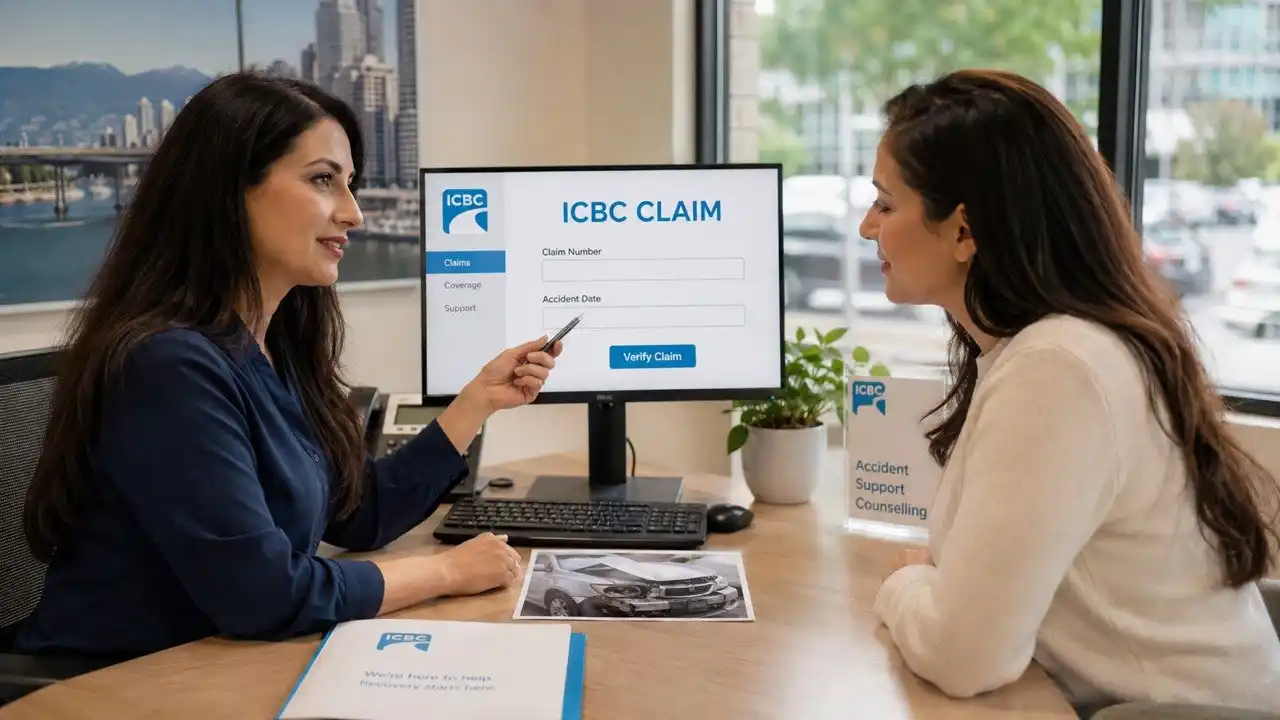
Before beginning covered sessions, the accident must be reported to ICBC and a claim number must be issued for the injured person. A claim can be reported online or by telephone. When reporting by phone, you will generally be asked for identification information, the time and location of the accident, vehicle details, and a description of your injuries.
Someone who was not the driver or registered owner of the vehicle, such as a passenger, pedestrian, or cyclist, can still report the accident and their injuries. Not owning the vehicle or not having a driver’s licence does not, by itself, prevent an injury claim from being opened.
If you would like to determine whether you may be eligible for counselling sessions or are uncertain about your claim status, contact ICBC:
- ✓Vancouver and the Lower Mainland: 604-520-8222
- ✓Toll-free within British Columbia, Canada, and the United States: 1-800-910-4222
5
The First 12 Weeks: What Does Pre-Approved Coverage Actually Mean?

After a claim has been opened, an injured person is considered pre-approved for certain initial treatments during the first 12 weeks following the accident. Current counselling coverage includes up to 12 sessions of 50 minutes each within that 12-week period.
Several aspects of this coverage are commonly misunderstood.
12 sessions do not mean 12 guaranteed weeks of treatment. The sessions must take place within 12 weeks of the accident date. If someone waits several weeks before beginning treatment, less time will remain to use the initial coverage.
Using all 12 sessions is not mandatory or automatic. The number and frequency of sessions should be appropriate to the person’s clinical needs and treatment plan.
A physician’s referral is generally not required during the initial period. A claim number is sufficient to begin treatment. However, before treatment begins, the provider should confirm that the claim is active, verify the accident date and the time remaining in the initial period, and determine whether direct billing is available.
“Pre-approved” does not mean that ICBC will pay any amount charged. ICBC pays up to its established fee limit. If a provider charges more than the ICBC rate, the client may be responsible for the difference, and ICBC may not reimburse that additional amount. This should be clarified before the first session.
6
Does the Counsellor Need to Belong to the ICBC Recovery Network?
For easier access and direct billing, it is preferable to choose a counsellor who is registered as an approved ICBC provider, has a Vendor Number, and can submit claims directly through ICBC’s system.
The ICBC Recovery Network is a network of healthcare professionals and treatment centres that have accepted ICBC’s requirements and can bill ICBC directly for approved services. The benefit of direct billing is that clients generally do not need to pay the entire cost themselves and then apply for reimbursement.
You should therefore ask the therapist directly:
- Do you have an active ICBC Vendor Number?
- Are you a member of the ICBC Recovery Network?
- Do you offer direct billing?
- Do you charge clients more than the ICBC rate?
- Do you have experience treating trauma, driving anxiety, and the psychological effects of motor vehicle accidents?
- If necessary, do you prepare initial reports and requests for extended treatment?
7
Which Counsellors Can Become ICBC Providers?

Having a counselling degree alone is not sufficient to provide services directly to ICBC clients. The therapist must hold active professional membership in an organization accepted by ICBC and then apply to become a registered provider and obtain a Vendor Number.
Registered Clinical Counsellor, or RCC, is one of the most widely recognized professional designations accepted for clinical counselling services in British Columbia. Some qualified professionals from other approved professional organizations may also be eligible to apply. However, ICBC makes the final decision regarding provider approval and eligibility for direct billing.
An ICBC provider is not simply someone whose sessions are paid for by ICBC. Providers have specific professional and administrative responsibilities, including:
- ✓Maintaining active professional membership and following their professional organization’s ethical standards
- ✓Maintaining the required professional liability insurance
- ✓Obtaining a Vendor Number and accepting ICBC’s direct-billing terms
- ✓Maintaining accurate clinical and financial records
- ✓Providing treatment related to accident-caused injuries
- ✓Documenting measurable and functional treatment goals
- ✓Submitting invoices, reports, and treatment requests through the designated system
- ✓Obtaining the client’s informed consent before disclosing required information
- ✓Collaborating with the Recovery Specialist and, when necessary, other members of the treatment team
- ✓Refraining from billing for services that were not provided, duplicate sessions, or services outside their authorized scope of practice
8
What Is Assessed During the Initial Session?

An initial assessment should involve more than a general conversation about feelings. The therapist should develop a clear understanding of the person’s condition before and after the accident, including:
- ✓The nature of the accident and the person’s subjective experience of it
- ✓Related psychological, cognitive, and physical symptoms
- ✓Mental health history before the accident
- ✓Sleep, concentration, mood, and anxiety levels
- ✓Ability to drive or use other forms of transportation
- ✓Employment, education, and family responsibilities
- ✓Independence and social participation
- ✓Pain and its relationship with mood and anxiety
- ✓Risk factors, including thoughts of self-harm
- ✓Barriers to returning to the previous level of functioning
- ✓Specific and client-centred treatment goals
ICBC’s official Counselling Initial Report form indicates that a therapist may report on employment status, daily functioning, previous mental health concerns, medications, suicide risk, assessment-tool results, barriers to recovery, and the plan for returning the person to their pre-accident level of functioning.
Clients should therefore understand that ICBC-funded treatment, unlike completely independent private counselling, may involve reporting information relevant to the claim.
This does not mean that all personal details discussed during therapy will be disclosed. The therapist should share only information that is relevant and necessary, within the limits of the client’s consent and any legal or insurance requirements.
During the first session, it is helpful to ask about:
- The limits of confidentiality
- The type of report that may be prepared
- Who will receive the information
- The difference between private clinical notes and reports submitted to ICBC
9
What Happens If Treatment Is Still Needed After 12 Weeks?

The end of the initial 12-week period does not necessarily mean that the person’s eligibility for treatment has ended. However, continued sessions are no longer automatically approved. If accident-related symptoms continue to interfere with the person’s functioning, the provider can explain the need for a Benefit Extension to the Recovery Specialist.
A strong extension request should generally demonstrate:
- ✓Which symptoms remain
- ✓How those symptoms continue to limit daily functioning
- ✓What progress has occurred
- ✓Which treatment goals remain unmet
- ✓Why continued treatment is clinically necessary
- ✓How many additional sessions are recommended
- ✓What treatment approach will be used
- ✓How progress will be evaluated
For complex claims, ICBC may request additional assessments or a Comprehensive Medical Assessment. The therapist does not make the extension decision independently. The therapist provides a clinical recommendation, while ICBC decides whether the additional treatment will be funded.
ICBC’s guidance regarding treatment after the first 12 weeks also explains that providers should discuss the need for additional services with the client’s Recovery Specialist.
Until reliable or written approval has been received from ICBC, continued sessions should not be assumed to be covered automatically. It is important to confirm:
- ✓The number of sessions approved
- ✓The period during which they must be used
- ✓The approved rate
- ✓Any additional conditions attached to the authorization
10
How Can You Gain the Greatest Therapeutic Benefit from Your Sessions?
The purpose of ICBC counselling is not limited to discussing emotions or receiving short-term support. Effective treatment should connect the person’s emotional experience with their practical return to everyday life.
Depending on the client’s circumstances, a treatment plan may include:
- ✓Education about trauma responses
- ✓Nervous-system regulation
- ✓Cognitive behavioural therapy
- ✓Gradual exposure to driving
- ✓Panic-management strategies
- ✓Sleep improvement
- ✓Coping with pain
- ✓Behavioural activation
- ✓A return-to-work plan
Conclusion
ICBC counselling sessions are intended for people whose mental health or functioning has been affected by a motor vehicle accident, not only those with severe physical injuries or a formal PTSD diagnosis.
Drivers who were at fault or not at fault, passengers, pedestrians, cyclists, and motorcyclists may be eligible. The initial practical requirement is to report the accident, open an injury claim, and obtain a claim number.
During the first 12 weeks following the accident, up to 12 counselling sessions of 50 minutes each are pre-approved without a physician’s referral. After that period, continued treatment must be recommended to ICBC using clinical evidence and functional treatment goals and must receive separate approval.
Treatment is not limited to discussing the accident. Through a careful assessment of symptoms, identification of barriers to recovery, and development of a focused treatment plan, counselling can help reduce anxiety, fear of driving, panic attacks, insomnia, trauma symptoms, and difficulties returning to work and everyday life.
When the client is eligible, approved sessions can be billed directly to ICBC. This generally means that the client does not need to pay the full cost and then apply for reimbursement.
To book an appointment, simply indicate when calling or completing the appointment request form that you have an active ICBC claim. You will need to provide your claim number, accident date, and contact information.
With your permission, your claim status can be reviewed to determine whether direct billing is available, whether you are still within the initial 12-week period, and which conditions apply to your sessions.
If more than 12 weeks have passed since the accident or your initial sessions have ended, your need for continued treatment will be assessed. When clinical reasons support additional treatment, a request for further sessions can be submitted to ICBC for consideration.
ICBC makes the final decision regarding eligibility and coverage approval. However, before treatment begins, the administrative and financial process will be explained to you as clearly as possible.
